Activities
Snorkelling in Malta: Best Spots, What to See, and Honest Tips
Malta has some of the clearest water in the Mediterranean — here's where and how to explore it
•December 4, 2025
Malta regularly records underwater visibility of 30+ metres — some of the best in the entire Mediterranean. You don't need dive certification or fancy gear. A mask, snorkel and fins is all it takes to explore one of Europe's best underwater environments.
Best Snorkelling Spots in Malta
1. Blue Lagoon, Comino ⭐⭐⭐⭐⭐
The obvious number one. Turquoise lagoon with white sandy bottom — visibility 15–20+ metres, reef fish, sea urchins, small morays in rock crevices. Protected from waves on all sides. Downside: extremely busy with boats in summer. Go before 9am or after 5pm.
2. Cirkewwa (near the Gozo ferry) ⭐⭐⭐⭐
Less touristy, richer wildlife. At Paradise Bay and the rocks along Marfa Ridge — good shoals of fish, seahorses, octopuses. No crowds. 40 minutes by car from Valletta.
3. St Peter's Pool, Marsaxlokk ⭐⭐⭐⭐
Natural rock pools in limestone. Entry via steps carved by the sea (and some helping hands). Clear water, good fish life, small caves to explore. Best reached by taxi or rental car.
4. Golden Bay ⭐⭐⭐
Malta's main sandy beach. Snorkelling off the rocks on both sides of the beach — fish, sea urchins, occasional starfish. Easy entry from sand, good for children.
5. Ħondoq ir-Rummien, Gozo ⭐⭐⭐⭐
A hidden inlet on Gozo's eastern side. Little-known, beautiful. Good fish life, crabs, and occasionally dolphins visible from shore.
6. Wied il-Għajn (near Marsaskala) ⭐⭐⭐
Natural inlet sheltered on two sides. Calm water, good visibility, popular with families. Walking distance from Marsaskala centre.
Gear — Hire or Buy?
Hire: available at all major beaches and Blue Lagoon — expect €5–10 for mask and snorkel, €5 for fins.
Buy: if you're staying more than a week, buy your own mask at a sports shop (Decathlon is in Qormi, around €15–25 for a good set). Better quality and fit.
When to Snorkel in Malta?
Best visibility: May–October. Water temperature from 20°C (May) to 28°C (August–September). Winter: possible, but water around 16°C — you'll want a wetsuit. Visibility can actually be excellent (fewer algae), but few people swim.
What Will You See?
- Moray eels — in rock crevices and crevices
- Octopuses — under stones on the seabed
- Sea bream, sea bass, grouper — common throughout
- Salpa, dentex — in large schools
- Sea urchins — everywhere (don't stand on them!)
- Starfish and sea cucumbers
- At Blue Lagoon: occasional small manta or sea turtle
Safety Tips
- Always snorkel with a buddy or near other swimmers
- Watch for currents at headlands (especially Cirkewwa)
- Don't step on sea urchins — the spines break and hurt
- Use mineral or reef-safe sunscreen — petrochemical creams damage the marine environment
Related Videos
More videos →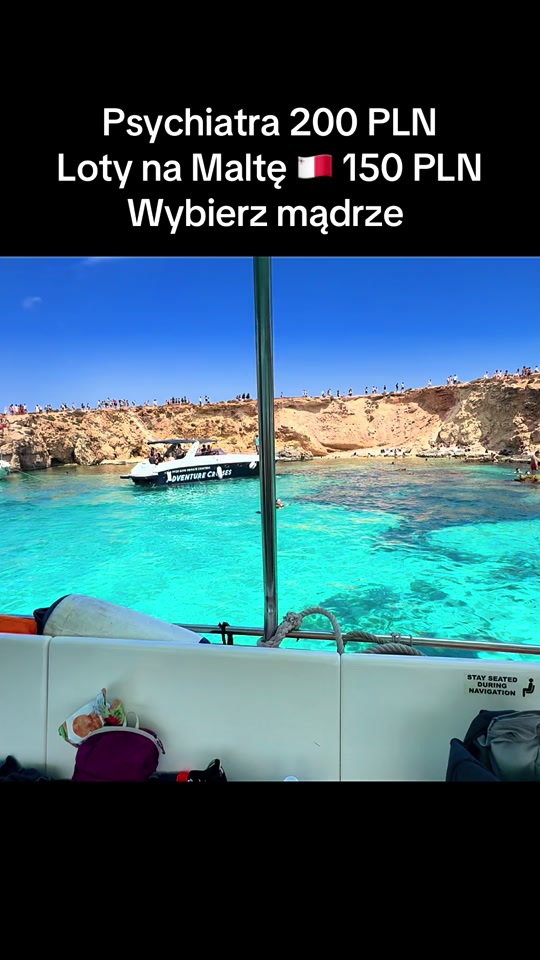
TikTok
PL
0:11
Przyroda
#polkanamalcie #bluelagoon #maltavibe #boatparty #bbq
Polka z Malty3 mies. temu
132K2K🔥
7.6
TikTok
PL
1:03
Podróże
Wystarczy że w mapy wpiszesz Surfside Sliema, żeby odnaleźć to miejsc...
Polka z Malty3 mies. temu
52K2K🔥
7.6

TikTok
PL
1:04
Podróże
Kiedy żeś nie wziął przejściówki do prądu na Maltę ⚡️🔌 #polkanamalcie...
Polka z Malty6 mies. temu
36K629
7.3
TikTok
PL
1:15
Podróże
Co myślę o wyborze Qawra, St. Paul’s Bay i Bugibba na centrum wypadow...
Polka z Malty3 mies. temu
17K238
7.3
Topics
snorkellingmaltaunderwaterbeachesactivities
Keep Exploring
More Community-Powered Insights
Every article is built from real tourist discussions and enriched with tips from Monika and the community.