35 pts3 min read🚶 on foot🟢 easy
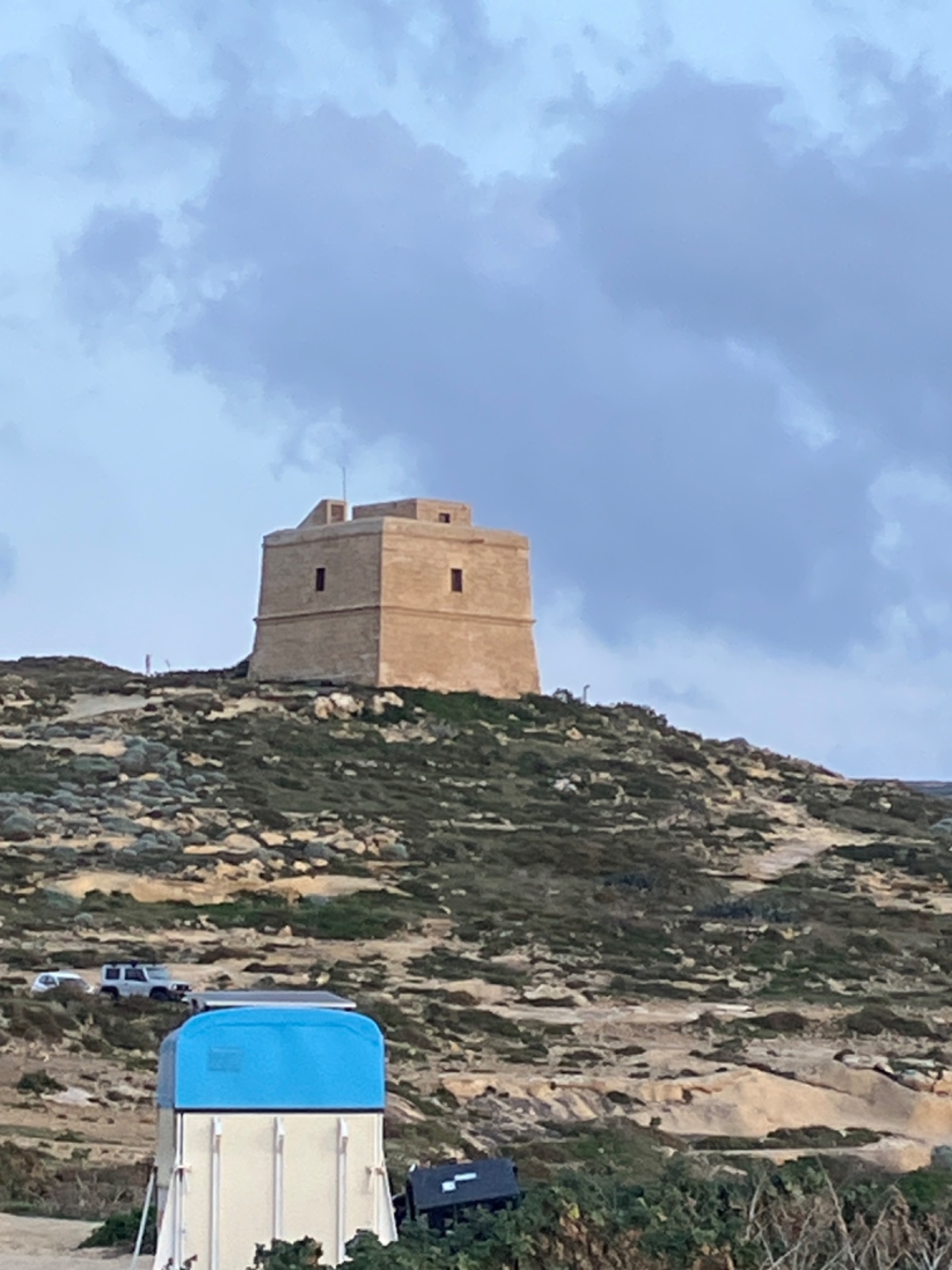
Dwejra Tower, built in 1651 under Grand Master Lascaris, guarded the coast and protected the precious plant on Fungus Rock. Four sentries kept watch 24/7.
A watchtower on the wild coast
Dwejra Tower was built in 1651 during the reign of Grand Master Lascaris, financed by the Universita (self-government) of Gozo. It was erected on the wind-battered western cliff to protect a vulnerable stretch of coastline through which pirates and corsairs could penetrate the island. The tower was armed with three 6-pounder cannon.
Guardian of Fungus Rock
Beyond its defensive role, the tower served a unique purpose: its four-man permanent garrison guarded access to nearby Fungus Rock. The plant Cynomorium coccineum, growing on this isolated rock, was considered a precious medicinal remedy and exported as a diplomatic gift to European courts. Guards were forbidden from allowing anyone onto the rock without the Grand Master's written permission.
From ruin to museum
The tower served until 1873, then was abandoned. The British briefly used it as an observation post during World War I. In 1997, Din l-Art Helwa (Malta Heritage Trust) restored the tower, which is now open to visitors.
Practical tip: The tower is free to enter during opening hours (check the Din l-Art Helwa website). The view from the roof over Fungus Rock, the Inland Sea, and the Dwejra cliffs is superb.
🧠 Test your knowledge
What did Dwejra Tower once guard?
Click an answer! +15 bonus pts in-game after check-in.
Tip
Managed by Din l-Art Helwa, sometimes open for visits. Beautiful at sunset with Fungus Rock in view.
Check in here
You haven't joined the game yet
Gallery


Nearby
🎬45 pts~100 m · ~1 min
Film: Clash of the Titans (1981)
The Azure Window on Gozo appeared in the final scene of the original 1981 "Clash of the Titans" as the backdrop for Perseus's battle with the Kraken.
👁️75 pts~130 m · ~2 min
Dwejra and Fungus Rock
Dwejra is not only the former Azure Window: Fungus Rock, Inland Sea, Blue Hole and cliffs still make it one of Gozo's strongest landscapes.
👁️35 pts~130 m · ~2 min
Dwejra Cliffs
The Dwejra Cliffs are dramatic rock formations on Gozo's western coast, encompassing the Blue Hole, Inland Sea, and the former Azure Window site. A paradise for geologists and photographers.