50 pts5 min read🚶 on foot🟢 easy
The only permanent freshwater body in all of Malta. The Order's cartographer was accused of drunkenness when he mapped a lake — but it actually exists. Home to the Painted Frog and the ongoing reconquista of Turkish frogs.
The Impossible Lake
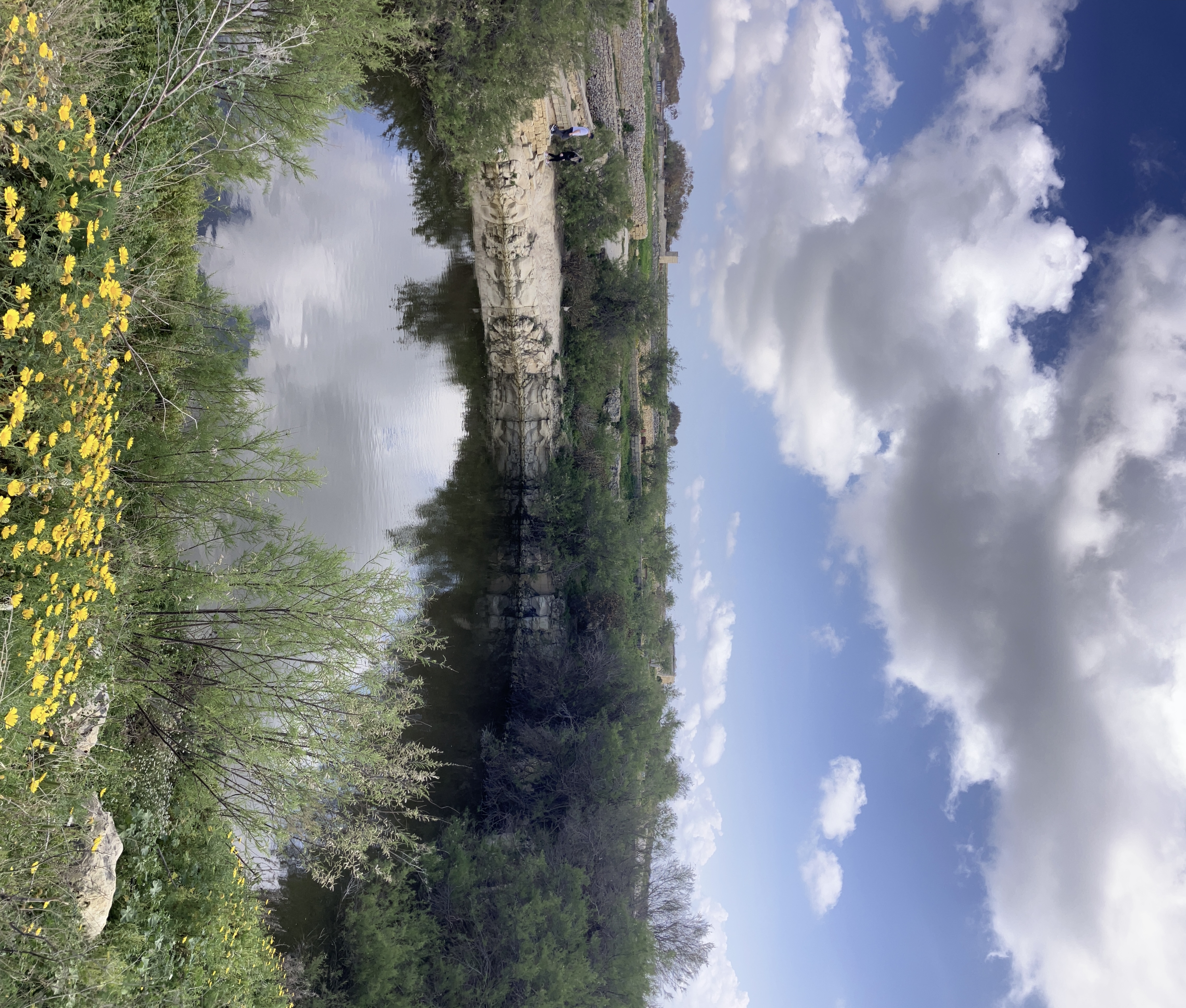
When the Order's cartographer presented a map with a lake marked on Gozo, the Grand Master asked him to take a sobriety test. Malta is 316 square kilometres of limestone. Zero rivers. Zero streams. Rain falls, sinks into rock, and vanishes as if it never existed. And yet here it is — a permanent freshwater body, calmly sitting between Kercem and Xlendi as if this were perfectly normal.
The cartographer was sober. The lake is real. L-Għadira ta' Sarraflu is the only natural, permanent freshwater body in the entire Maltese archipelago. The only one. Across three islands where even the cacti complain about drought.
Armored Residents
The lake is home to the Painted Frog (Discoglossus pictus) — the only indigenous amphibian in the Maltese Islands. Seven centimetres of fury in camouflage. The Order officially recognises it as the smallest knight on the island.
The Painted Frog possesses a skill that many Knights of the Order envy after a long feast: it can sleep through entire summers. Scientists call this "aestivation" — hibernation's summer cousin. When rain finally arrives, the frog wakes within hours, ready for action. Semi-fossilized bones of these frogs have been found in Għar Dalam Cave, meaning they have lived here for thousands of years. Longer than the Order. Longer than anyone cares to remember.
The Turkish Invasion (of Frogs)
In 1551, the Ottomans under Sinan Pasha kidnapped nearly 5,000 Gozitans. The island lay almost empty for years. But the Ottomans apparently never forgot about Gozo, because in the 1990s someone — nobody knows who — introduced the Levantine Frog (Rana bedriagae) to the lake. Genetic research traced these frogs back to southern Anatolia in Turkey.
Herpetologist Arnold Sciberras discovered them when he heard strange calls emanating from the pool. They were not the ghosts of Maltese knights, as he initially suspected. The reconquista of Ta' Sarraflu continues to this day. The Painted Frog manages somehow, but the Order monitors the situation with due gravity*.
* Due gravity means someone checks once a quarter whether the lake is still there.
Why It Matters
Ta' Sarraflu is protected as a Level 1 Area of Ecological Importance and a Candidate Special Area of Conservation of International Importance. That sounds serious because it is serious. Without this puddle**, the Painted Frog has nowhere else to go. In all of Malta, there is not a single river, not a single other permanent lake.
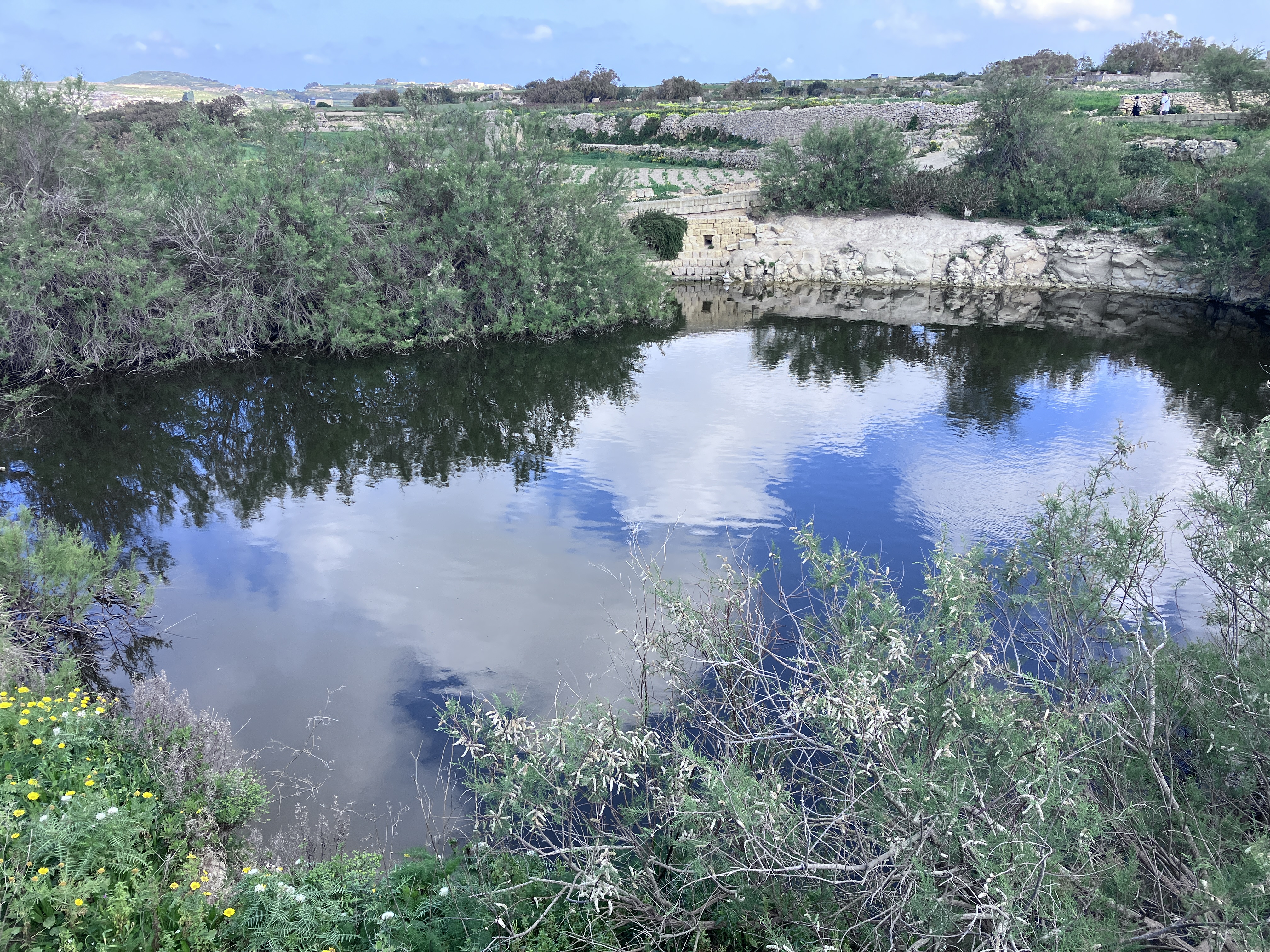
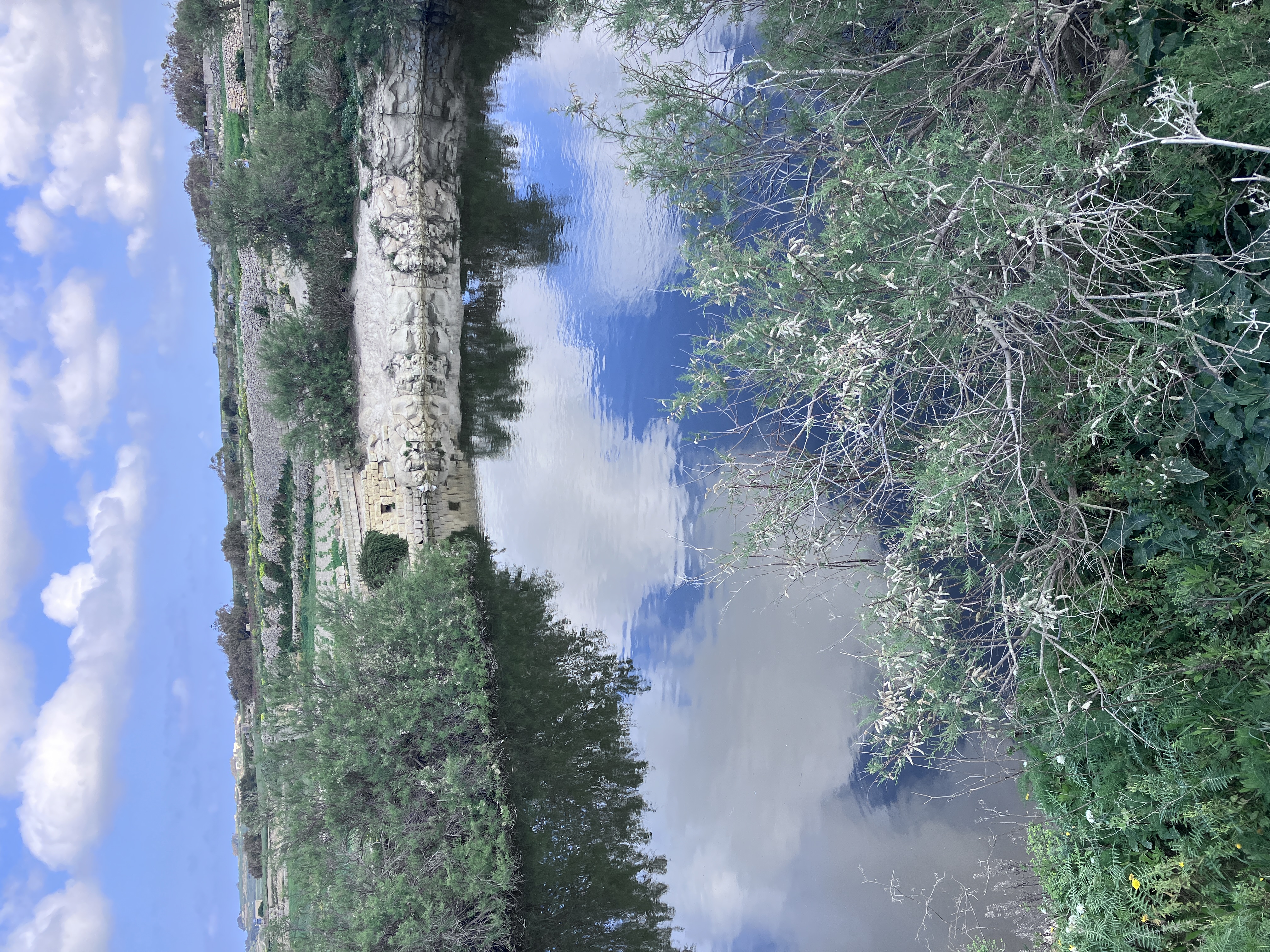
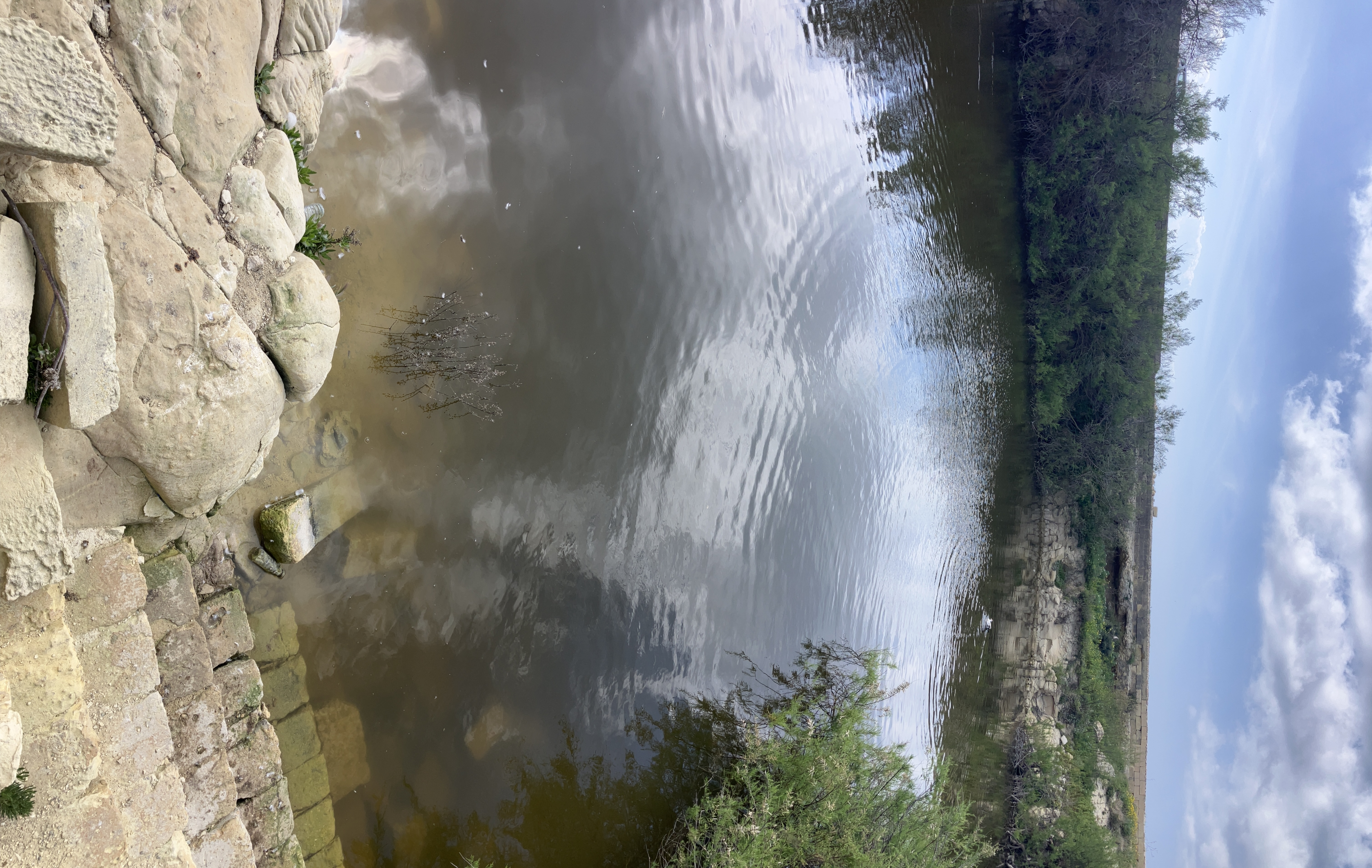
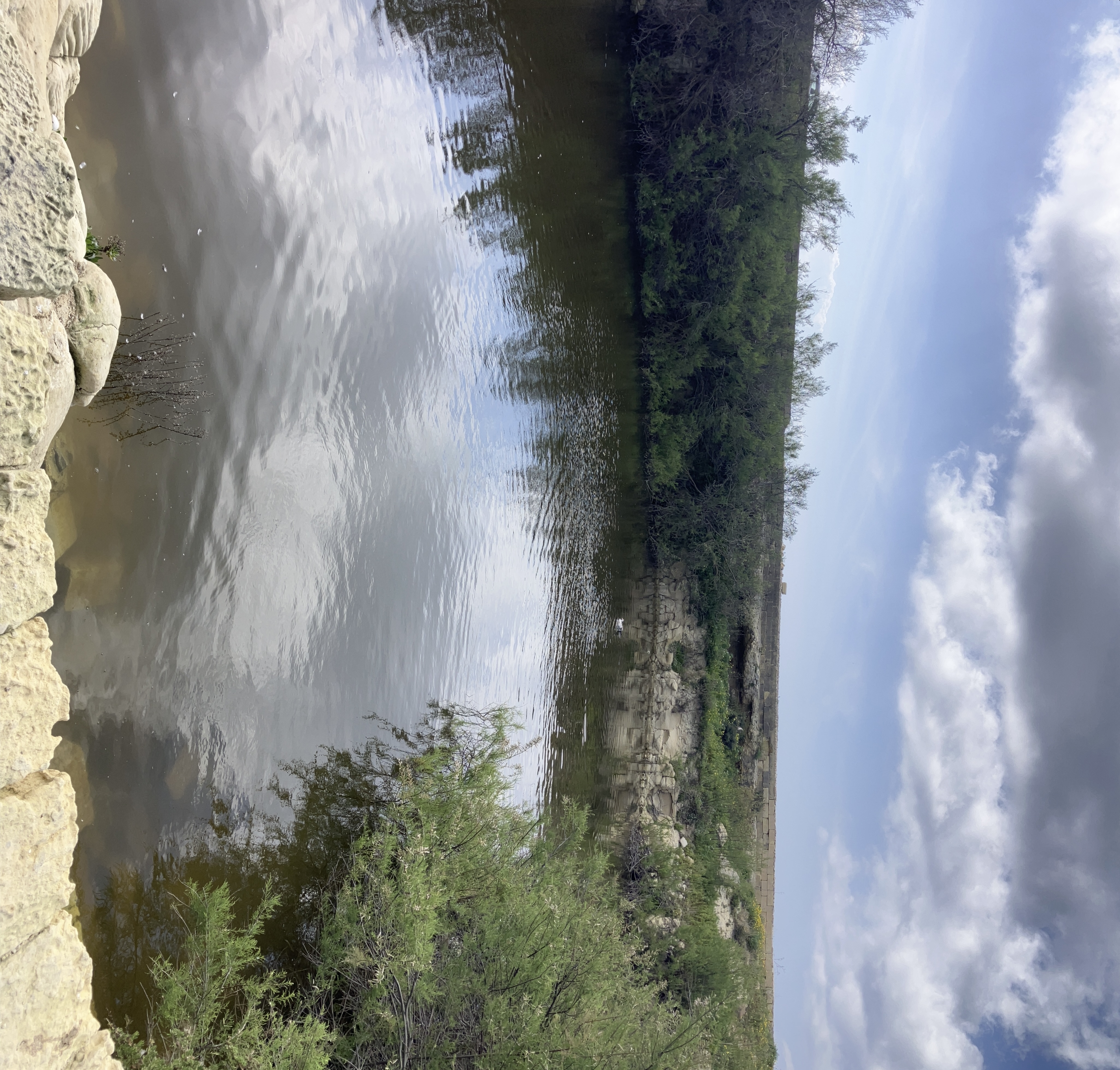
Wild olive trees, tamarisks, and yellow spring wildflowers surround the lake. The water is calm, sometimes slightly murky, and clouds reflect on its surface like a mirror. It is the quietest place on Gozo. Even the GPS falls silent out of respect.
** The Order officially objects to calling a Lake a "puddle" while acknowledging it would not impress a Bavarian.
Practical tip: Stand quietly at the shore, especially after rain — the frogs emerge to the surface. Spring is the best season: wildflowers bloom and the lake is full. Walk from Kercem (15 min) or along the cliff path from Xlendi (30 min). There is no parking, because there is nothing to park — the Order of Maltazar appreciates this philosophy.
Tip
Walk from Kercem or Xlendi. Stand quietly at the shore — frogs appear especially after rain. Spring is the best season for wild vegetation around the lake.
Check in here
You haven't joined the game yet
Gallery
Nearby
🗿70 pts~1.2 km · ~15 min
Ras il-Wardija Punic Sanctuary
Phoenician sanctuary of goddess Astarte on the 120m cliff of Ras il-Wardija. Rock-hewn c. 300 BC, used for 700 years. In 1988 a carving was stolen from the wall — recovered only after 23 years.
👁️35 pts~1.5 km · ~18 min
Dwejra Cliffs
The Dwejra Cliffs are dramatic rock formations on Gozo's western coast, encompassing the Blue Hole, Inland Sea, and the former Azure Window site. A paradise for geologists and photographers.
👁️75 pts~1.5 km · ~19 min
Dwejra and Fungus Rock
Dwejra is not only the former Azure Window: Fungus Rock, Inland Sea, Blue Hole and cliffs still make it one of Gozo's strongest landscapes.