70 pts5 min read🚶 on foot🟡 medium
Phoenician sanctuary of goddess Astarte on the 120m cliff of Ras il-Wardija. Rock-hewn c. 300 BC, used for 700 years. In 1988 a carving was stolen from the wall — recovered only after 23 years.
A sanctuary at the edge of the world
On the promontory of Ras il-Wardija, where limestone cliffs plunge 120 metres to the sea, Phoenician sailors carved a sanctuary to the goddess Astarte into the living rock. The name "Wardija" is a corruption of Italian "Guardia" (watch post), as the headland served as a coastal lookout for centuries.
A chamber with five niches
The sanctuary consists of a T-shaped corridor leading to a rectangular chamber with five large niches carved into three walls, decorated with imitation architectural mouldings. A rock-cut bench runs along the walls, probably for ceremonial banqueting or offerings. Also hewn from the rock are a basin with internal steps (ritual bathing?), a bell-shaped well, and a water reservoir.
700 years of prayer
The sanctuary was established in the 4th-3rd century BC and remained active through the Roman period, possibly into the 4th century AD. In 2021-2022, a team from La Sapienza University in Rome (Federica Spagnoli) discovered pottery fragments inscribed with Astarte's name, confirming a direct link to Tas-Silg, Malta's main Punic sanctuary. Crosses carved on the walls testify to later Christian appropriation of the site.
Theft and recovery
On 30 March 1988, someone cut a carved figure with outstretched arms from the wall of one of the niches. Probably a symbol of the goddess Tanit or a medieval cross. With an axe. From living rock. The graffito was recovered only after 23 years, in June 2011. It can now be seen at the Archaeology Museum in the Victoria Citadel.
Trail and access
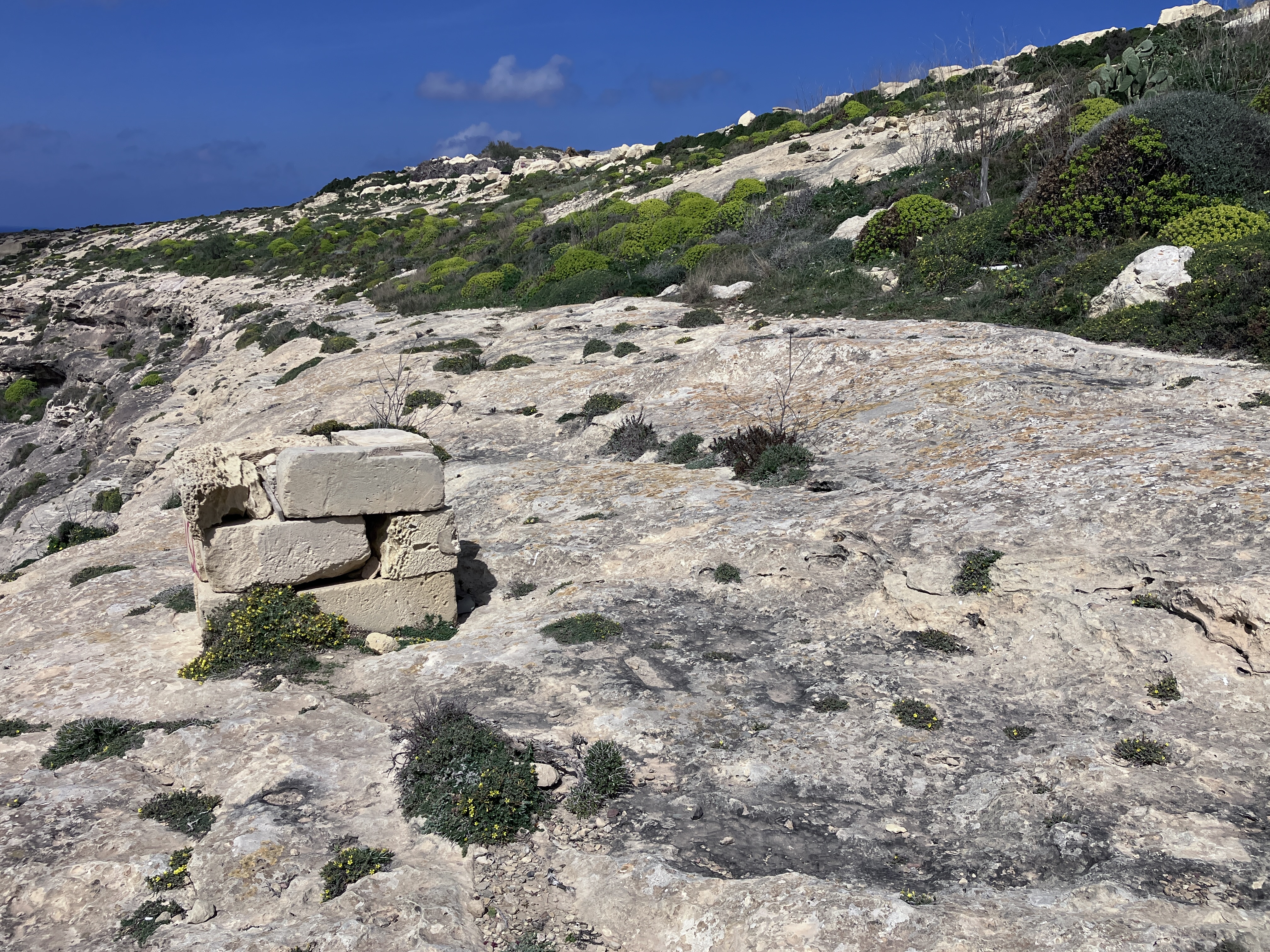
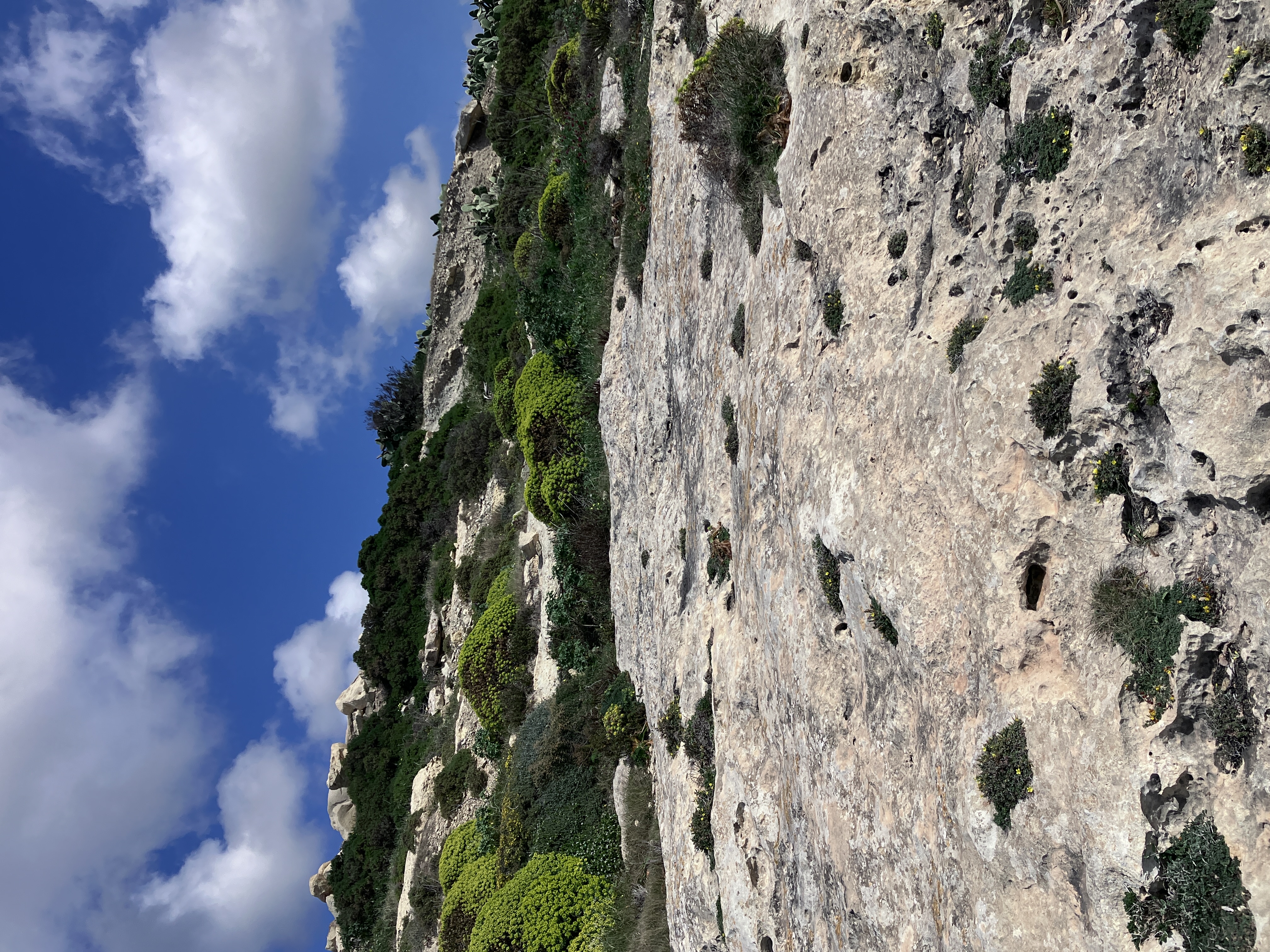
The sanctuary lies on the cliff path between Xlendi and Dwejra, about 150 m from the Ta' Sarraflu freshwater pool. The land is private (Spiteri family), with no fencing or tourist infrastructure. Cliff edges have no safety barriers. The ruins are in a neglected state, but the dramatic setting on the edge of a 120-metre precipice rewards the effort of finding it.
Practical tip: Walk from Ta' Sarraflu toward the cliffs (about 10 minutes). The sanctuary is rock-cut and easy to miss. Look for a rectangular depression in the terrain. The original Tanit/cross graffito can be seen at the Archaeology Museum in the Citadel (EUR 2 admission).
Sources: George Azzopardi, Ras il-Wardija Sanctuary Revisited (Archaeopress, 2017) · Federica Spagnoli, JEMAHS Vol. 11 (2023) · Missione Archeologica Italiana a Malta (1963-1967)
Tip
Follow the trail from Ta' Sarraflu toward the cliffs. The sanctuary is rock-cut, easy to miss! The Tanit/cross graffito can be seen at the Archaeology Museum in the Citadel.
Check in here
You haven't joined the game yet
Gallery
Nearby
💎50 pts~1.2 km · ~15 min
Ta' Sarraflu Lake
The only permanent freshwater body in all of Malta. The Order's cartographer was accused of drunkenness when he mapped a lake — but it actually exists. Home to the Painted Frog and the ongoing reconquista of Turkish frogs.
👁️35 pts~1.4 km · ~17 min
Dwejra Cliffs
The Dwejra Cliffs are dramatic rock formations on Gozo's western coast, encompassing the Blue Hole, Inland Sea, and the former Azure Window site. A paradise for geologists and photographers.
👁️75 pts~1.4 km · ~17 min
Dwejra and Fungus Rock
Dwejra is not only the former Azure Window: Fungus Rock, Inland Sea, Blue Hole and cliffs still make it one of Gozo's strongest landscapes.